
THE COMFORT OF STRANGERS

Last day today, awards are tonight. Betting is on, who's supporting their favourite, who hopes that movie they really didn't like won't be nominated, who's satisfied of what he saw and is only waiting to know who'll be awarded .

We met Ralston Jover, director of Baseco Bakal Boys. During film presentation he and the producers (among which, a young Brazilian model who arouse staff attention) were wearing traditional Philippine clothing, nice and embroidered, made out of Pineapple fibre.

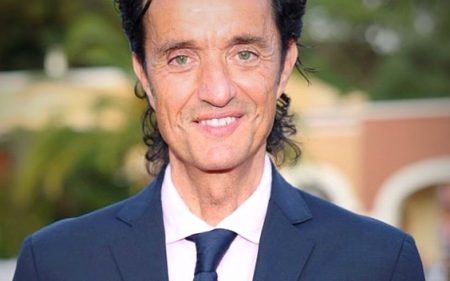
Ralston is a very dignified man, he looks rather timid however as soon as we let him talk he flows like a flooding river. We ask him where the idea for his movie comes from. “ In 2006 co-scriptwriter Henry Burgos watched local TV documentary on these kids, the metal divers, which we call Bakal Boys. They operate in Manila port where they dive to retrieve pieces of metal fallen of the boats to then re-sell them to tinkers. We've done some background, initially picturing it as documentary then a fiction movie. Two or three children drown each week, often bodies are never found. I've done research for over one year: I can tell you all of this while sleeping!". He smiles. "I was writer prior to directing , I've always done research, I go hands on, interviewing, exploring, I study the phenomenon. Research lasted six months, I spoke to many people, I learned their culture, a local culture different from the city. Finally I began shooting"

The Kids are the main characters, they're battle cry "To the sea!". "Children don't deserve this, toughness of reality pushes them to sea. They think it's a game, they're proud of helping out their parents make some money, not considering danger and pressure. I'm not a young boy anymore, however I tried to catch and portray their point of view. Audition counted more than 200 kids, I picked 15. Most were illiterate, therefore they needed someone to help them read and memorize the lines. We followed up with an education program, we sent them to school during shooting and still now endorsements are provided. We must pull them out of the water, I'm extremely proud of my producers, it's our commitment. Now they're actors, professionals. They gave us the whole story, every hue, I just stood behind the camera, following them, the important ting was to let them be, improvise. I owe them everything, especially Utoy, he's an amazing kid". Hence he looks over and excuses himself: "I talk too much!" and bursts out laughing.

Over here mothers teach their kids to beware the wolf: in the movie, like in the Philippines, they have mermaids. "Mothers tell tales about mermaids, here they're called djesebel. Children love them, while parents tell them not to go dive without permission if not mermaids will take them away to never come back again. Kids believe it nevertheless many drown just the same. A sort of magic realism. I used mermaids the way Utoy would picture them. When I interviewed him he said 'The kids who disappear? The mermaids keep them'. He really believes it. 'Our friends disappeared however they'll be back, the mermaids will forgive them'. You must believe in children's mental power, the power of imagination. The film is halfway in between fiction and documentary, a fantasy world based on the point of view of a child”.

Then he tells us a curious story. "We bought an anchor for a very important scene in the movie, however the night before shooting it was gone! The kids ran over to tell me: one guy in my crew needed cash and sold it to a junkshop for synch. I wanted to cry, laugh, scream, however the kids never left me, they were there with me. I didn't sleep, it was 3 in the morning and shooting was at 6, eventually we found the anchor and went on with the film".

We spoke to co-producer Bessie Badilla, model in America, definitely a beautiful woman, although she says laughing: "I'm not like this in the morning: my dogs don't recognize me and bark at me!". She tells us about the movie and her commitment: "We created a program to sustain the 15 metal divers, however instead of going to school they'd dive because they needed money to buy food. Therefore we pay them to go to school, in order for them to have money to live off. Since the director knew me I was never allowed to follow shooting: I would've brought towels, food, water and so forth, I'm a mother, you know, I want to protect them! I saw them all at the Christmas party we'd organized in their favour: they danced some hip hop for us, wonderful!".

NdC 1 (Just for Fun) – Heard it in the cue from a lady who'd heard it at her time from another lady and so forth (who knows who made it up!). "There's that other Festival with a red carpet. But we've got more. We've got Coppola, Michael Powell and the wonderful Red Shoes".

NdC 2 - Co-producer of Bakal Boys tells us her uncle was Francis Ford Coppola's chauffeur during the making of Apocalypse Now. Coppola chose him for his looks: he was the biggest and tallest. Waking up Coppola smoothly wasn't easy, thus her uncle would pick him up with one arm under the head and the other under his legs and put him to bed. Before saying goodbye she adds on another surprise: always the same uncle would chauffeur around Marlon Brando, without though knowing who he was. Brando bothered: "Don't you know who I am?" and the uncle: “No, and I don’t care, but my boss is Mr. Francis Ford Coppola”. Wow!

Paola Fornara

Tfl Bkgd