


Country: Iran
Year: 1985
Duration: 85'
The story dates back to the years before the Islamic Revolution. Valeh forsakes his family in order to follow his political activities. Eventually, police arrests Valeh while his wife is experiencing personal problems and economic hardships. As an inmate, Valeh questions his political ideas, while his comrades urge to sacrifice himself for propaganda purpose. Inspired by militant muslin, Valeh faces death, but for a different cause.
"In Baycot I intended to say no struggle can be brought to its conclusion without faith in God and in the Universal Judgement. In jail there were many more insane people than these, either because they turned into psichopats because of the torture or because they had lost their minds because of the pressure they were under in their political organizations. Among other things, it should be said that the madness that marks this specific ward, which I have treated in the film, also has a symbolic meaning. I used a surrealistic style in Baycot, too, when I dealt with problems of Maryam and the old woman as well as the themes related to everyday life. I cast actors through newspaper advertisements. For instance, Ms. Sarmadi (in the role of Maryam), the investigator, the head of the political organization and most of the others who have taken part in the film came in by this way." (Mohsen Makhmalbaf)
Biography
film director
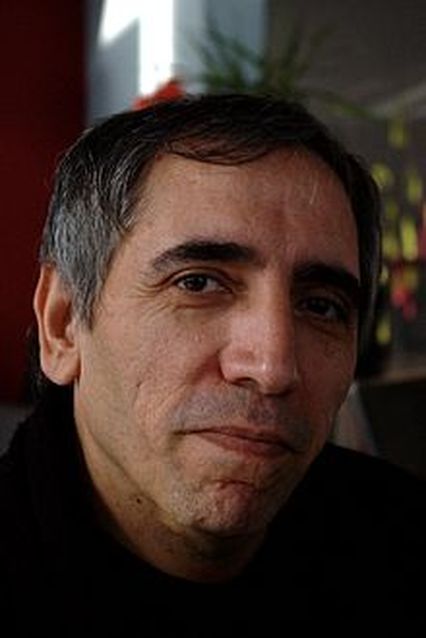
Mohsen Makhmalbaf
Born in 1957 in a poor quarter of Tehran, Mohsen Makhmalbaf had to do more than a dozen of odd jobs lo earn his own and help support his mother between the age of eight and seventeen. When he was 15, he engaged in clandestine activity through a guerrilla group he himself had organized. Al 17, he was shot and arrested when trying to disarm a policeman and spent four and a half years in prison.
Released during the 1979 revolution, he quit all political activity and went in for literature and cinema. His published work includes about twenty volumes of novels and dramaturgy, film scripts and essays on art, some of which haze been translated into Turkish, Arabic, Urdu, Kurdish and English. With several scripts in addition lo the ones he had personally filmed, two documentaries and 20 movies edited by him, Makhmalbaf is the most prolific Iranian director of the last two decades.
His fourteen films made in as many years have invariably been, for one reason or another, controversial at home and abroad. The Peddler, The Cyclist, Marriage of the Blessed, Time for Love, Once Upon a Time, Cinema, The Actor and Salaam Cinema have so far been presented at 170 international film festivals and screened in 40 countries, with 22 prizes won among them. The awards include the top prize at the Rimini International Film Festival (Italy, 1989) and the East-West Award al the Hawaii International Film Festival (Usa, 1991) for The Cyclist; the First Prize of the Taormina International Film Festival (Italy, 1992), the jury's Special Award and the Fipresci film critics' award at the Karlovy Vary International Film Festival (Czechoslovakia, 1992), and the jury's Special Award at the Istanbul International Film Festival (Turkey, 1992) for Once Upon a Time, Cinema; and the Critics' Award (Sao Paulo, Brasil, 1995) for all his works.
FILMOGRAFIA
Film di finzione/Fiction Films
Tobe-ye Nasuh (Nasooh's Repentance/Pentimento definitivo, 1982).
Do cheshm-e bi su (Two Sightless Eyes/Due occhi senza luce, 1983).
Estèaze (Seeking Refuge in God/Rifugiarsi in Dio, 1984).
Baycot (Boycott/Il boicottaggio, 1985).
Dastforush (The Peddler/L'ambulante, 1986).
Baysilkeran (The Cyclist/Il ciclista, 1987).
'Arusi-ye khuban (The Marriage of the Blessed/Il matrimonio dei benedetti, 1988).
Nobat-e asheqi (Time of Love/Tempo d'amare, 1990).
Shabhay-e Zayandeh Rud (Nights on the Zayandeh Rud/Notti sullo Zayandeh Rud, 1990).
Ruzi ruzegari cineina/Nasseroddin Shah, hactore cinema (Once Upon a Time, Cinema/C'era una volta il cinema, 1991).
Honar Pishé (The Actor/ L'attore, 1992).
Salaam Cinema (Salam Cinema, 1994).
Gabbeh (idem, 1995).
Nun va goldun (A Moment of Innocence/Un istante di innocenza,1996).
Documentari/Documentare
Gozideh tasvir dar doran-c Qajar (A Selection of Images from Qajar Era/Una selezione di immagini del periodo Qajar, 1992).
Sang-o shisheh (The Stone and the Glass/La pietra e il vetro, 1993).
Cast
& Credits
Director and screenplay: Mohsen Makhmalbaf.
Director of photography: Farai Heydari.
Art director: Moliammad Baqer Ashtiani, Massud Qandi.
Montaggio, musica e suono: Rubik Mansuri.
Cast and characters: Majid Malidi (Valeh), Mohammad Kasebi ('Ali), Zohre Sarmadi (Maryam), 'Ardalan Shoja'i Kave, Akbar Kordbache, Sald Kashan Fallah, Esma'il Soltanian, Bahman Ruzbehani.
Production company: Circolo artistico per l'organizzazione della propaganda islamica.
Foreign sales agent: Farabi Cinema Foundation, 55 Sie-Tir Avenue, 11358 Tehran, Iran, tel. +98-21-671010, fax +98-21-678155.
Director of photography: Farai Heydari.
Art director: Moliammad Baqer Ashtiani, Massud Qandi.
Montaggio, musica e suono: Rubik Mansuri.
Cast and characters: Majid Malidi (Valeh), Mohammad Kasebi ('Ali), Zohre Sarmadi (Maryam), 'Ardalan Shoja'i Kave, Akbar Kordbache, Sald Kashan Fallah, Esma'il Soltanian, Bahman Ruzbehani.
Production company: Circolo artistico per l'organizzazione della propaganda islamica.
Foreign sales agent: Farabi Cinema Foundation, 55 Sie-Tir Avenue, 11358 Tehran, Iran, tel. +98-21-671010, fax +98-21-678155.