


Country: Taiwan
Year: 2005
Duration: 135\'
Three stories taking place at three different moments, dedicated to the time of love, of freedom and of youth, respectively. 1966: a young man meets a waitress in a billiard room shortly before he leaves to do his military service. But when he returns to see her again he learns the girl has moved. 1911: a rich man wants to redeem a courtesan’s contract and steps in to hasten up the process after his son gets the girl pregnant. 2005: a singer who is going blind and a photographer who lives with his girlfriend fall in love in chaotic Taipei. “Our lives are full of fragments of fairly unimportant memories, which we don’t know how to name or classify. But they remain in our minds, they are impossible to cancel. I’m almost 60 years old now and I have had those memories for so long that they are a part of me. I think they are the best moments of my life: not because I can’t forget them or because they are gone for good, but because they only exist in my memory. Maybe the only way to come to terms with them was to film them.” (Hou Hsiao-hsien)
Biography
film director
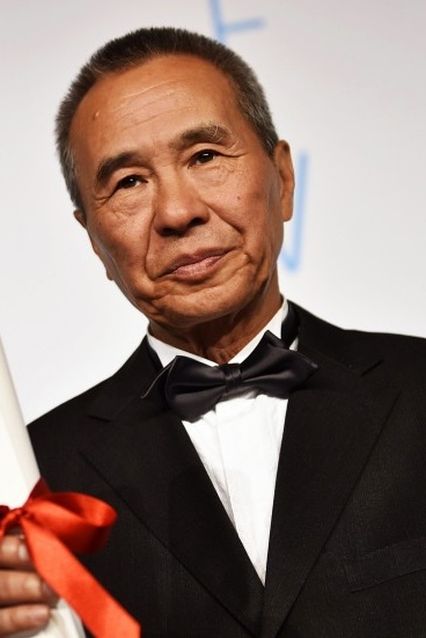
Hou Hsiao Hsien
(China) is a Taiwanese director and screenwriter, and one of the leading figures of the Taiwanese New Wave. After studying at the National Taiwan Academy of Arts, he made his directorial debut in 1980 and quickly established himself with an open, realist style reminiscent of the European New Waves. With The Boys from Fengkuei (1983), A Summer at Grandpa’s (1984) and A Time to Live, a Time to Die (1985), meditations on childhood, youth and the past of a family of mainland Chinese immigrants in Taiwan, he developed an autobiographical cinema grounded in the observation of everyday life, long takes and the composition of the frame. In 1989, he won the Golden Lion at Venice for A City of Sadness, the first instalment of a trilogy on Taiwanese history, followed by The Puppetmaster (1993) and Good Men, Good Women (1995). His subsequent films, all screened at Cannes, include Millennium Mambo (2001), Three Times (2005) and The Assassin (2015), for which he won Palm d’or for Best Director. In 2007, he received the Honorary Leopard at Locarno.
FILMOGRAFIA
Jiushi liuliu de ta (Cute Girl, 1980), Feng er ti ta cai (Cheerful Wind, 1981), Zai na hepan qingcao qing (The Green, Green Grass of Home, 1982), Erzi de da wan'ou (The Sandwich Man, coregia Wan Jen e Tseng Chuang-hsiang, 1983), Feng gui lai de ren (I ragazzi di Feng Kuei, 1983), Dongdong de jiaqi (In vacanza dal nonno, 1984), Tong nian wang shi (A Time to Live, a Time to Die, 1985), Lian lian feng chen (Dust in the Wind, 1986), Niluohe nuer (Daughter of the Nile, 1987), Beiqing chengshi (La città dolente, 1989), Hsimeng rensheng (Il maestro burattinaio, 1993), Haonan haonu (Good Men, Good Women, 1995), Nanguo zaijan, nanguo (Goodbye South, Goodbye, 1996), Hai shang hua (Flowers of Shanghai, 1998), Qianxi manbo (Millennium Mambo, 2001), Kōhī jikō (Café Lumière, 2003), Zui hao de shi guang (Three Times, 2005), Dian ji guan (The Electric Princess House, cm, 2007), Le voyage du ballon rouge (Il viaggio del palloncino rosso, 2007), Taipei Smiles (cm, 2010), Huangjin zhi xian (La Belle Époque, ep. di 10+10, cm, 2011), Nie Yinniang (The Assassin, 2015).