


Country: USA
Year: 1957
Duration: 85'
Axel Nordman is unemployed; he’s also a deserter, and haunted by the memory of his brother’s accidental death. He finally finds some peace of mind when he is hired as a freight car loader. He makes friends with Tommy Tyler, a black fellow loader, but Tommy is killed in a fight with the shady foreman, Malik. Even though he risks revealing that he’s a deserter and also facing Malik’s revenge, Axel denounces the man to the police in honor of his friendship with Tommy. “Metro was in a proxy fight at the time. They were involved in their internecine power struggles, and the film was finished before anyone knew what was going on. Edge of the City was a success d’esteem; but it didn’t make any money because they couldn’t get bookings on account of the racial issues.” (Martin Ritt)
Biography
film director
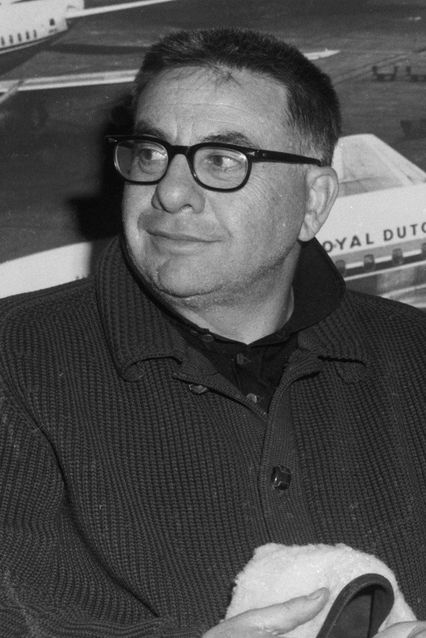
Martin Ritt
(New York, 1914 – Santa Monica, 1990), American director, film producer, and playwright, linked his name to Hollywood cinema in the 1950s and 1960s, in a phase halfway between the decline of the Studio System and the birth of New Hollywood, interpreting the tensions of his time and remaining faithful to the methods of classic cinema. He worked with the greatest actors (and others) of his generation, from Orson Welles to Paul Newman (both in The Long, Hot Summer), from Sidney Poitier to John Cassavetes (together in Edge of the City), and then with the faces of the new American cinema, Woody Allen (The Front), Sally Field (Norma Rae, Oscar for Best Actress), Robert De Niro and Jane Fonda, a splendid mature couple in Stanley & Iris, her last film.
FILMOGRAFIA
Edge of the City (Nel fango della periferia, 1957), No Down Payment (Un urlo nella notte, 1957), The Black Orchid (Orchidea nera, 1958), The Long, Hot Summer (La lunga estate calda, 1958), The Sound and the Fury (L’urlo e la furia, 1959), 5 Branded Women (Jovanka e le altre, 1960), Paris Blues (1961), Hemingway’s Adventures of a Young Man (Le avventure di un giovane, 1962), Hud (Hud il selvaggio, 1963), The Outrage (L’oltraggio, 1964), The Spy Who Came In from the Cold (La spia che venne dal freddo, 1965), Hombre (1967), The Brotherhood (La fratellanza, 1968), The Molly Maguires (I cospiratori, 1970), The Great White Hope (Per salire più in basso, 1970), Sounder (1972), Pete ‘n’ Tillie (Un marito per Tillie, 1972), Conrack (1974), Der Richter und sein Henker (Assassinio sul ponte, 1975, attore), The Front (Il prestanome, 1976), Casey’s Shadow (Ultimo handicap, 1978), Norma Rae (1979), Back Roads (1981), Cross Creek (La foresta silenziosa, 1983), Murphy’s Romance (L’amore di Murphy, 1985), Nuts (Pazza, 1987), Stanley & Iris (Lettere d’amore, 1990).
Cast
& Credits
regia/director Martin Ritt
soggetto/story dall’originale televisivo/from the TV play A Man Is Ten Feet Tall di/by Robert Alan Arthur
sceneggiatura/screenplay Robert Alan Arthur
fotografia/director of photography Joseph C. Brun
scenografia/set design Richard Sylbert
costumi/costume design Anna Hill Johnstone
montaggio/film editor Sidney Meyers
musica/music Leonard Rosenman
suono/sound James A. Gleason
interpreti e personaggi/cast and characters John Cassavetes (Axel Nordmann), Sidney Poitier (Tommy Tyler), Jack Warden (Charles Malik), Kathleen Maguire (Ellen Wilson), Ruby Dee (Lucy Tyler), Val Avery (il fratello di Axel/Axel’s brother), Robert F. Simon (George Nordmann), Ruth White (Mrs Nordmann), William A. Lee (Davis), John Kellogg (detective), David Clarke (Wallace), Estelle Hemsley (la madre di Lucy/Lucy’s mother)
produttore/producer David Susskind
produzione/production David Susskind Productions, Jonathan Productions, Metro Goldwyn Mayer
soggetto/story dall’originale televisivo/from the TV play A Man Is Ten Feet Tall di/by Robert Alan Arthur
sceneggiatura/screenplay Robert Alan Arthur
fotografia/director of photography Joseph C. Brun
scenografia/set design Richard Sylbert
costumi/costume design Anna Hill Johnstone
montaggio/film editor Sidney Meyers
musica/music Leonard Rosenman
suono/sound James A. Gleason
interpreti e personaggi/cast and characters John Cassavetes (Axel Nordmann), Sidney Poitier (Tommy Tyler), Jack Warden (Charles Malik), Kathleen Maguire (Ellen Wilson), Ruby Dee (Lucy Tyler), Val Avery (il fratello di Axel/Axel’s brother), Robert F. Simon (George Nordmann), Ruth White (Mrs Nordmann), William A. Lee (Davis), John Kellogg (detective), David Clarke (Wallace), Estelle Hemsley (la madre di Lucy/Lucy’s mother)
produttore/producer David Susskind
produzione/production David Susskind Productions, Jonathan Productions, Metro Goldwyn Mayer