


Year: 1980
Duration: 105'
In a small town near Cremona, the young textile mill worker Antonia lives with her father, who is the local union organizer, her mother, and three siblings, all of whom work for an arrogant and cruel boss. The farmers reject the harsh conditions and organize various types of battles and protests. After the major strikes in the spring of 1948, the story of Mirino and his family passes by way of the assassination attempt on Togliatti, which made the rank and file wonder about the “Italian way to socialism” and the utopia of armed revolt. In the meantime, Antonia marries Bernardo, goes to live in the countryside outside Brescia, and increases her political commitment, helping her husband lead the struggles of '49. During the final occupation of the farmhouses, Marziano Girelli is killed by the Carabinieri, a symbol of the sacrifice of the day laborers and farmers in the face of economic development that is out of control. Palmiro, the brother of Antonia's husband, is the last to leave for Milan in search of work, increasing the numbers of national emigration.
Biography
film director
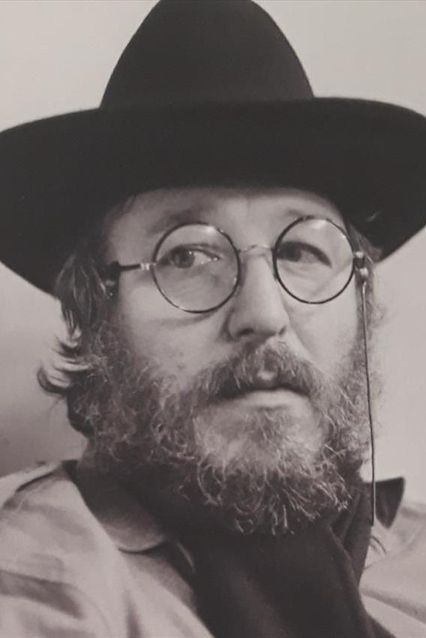
Gian Butturini
(1935-2006) began working in Brescia in the 1950s as an advertising graphic artist. He founded Studio Varo with Luciano Salodini and in 1957 taught the psychology of colors and figures at ENPI. Until 1969, he designed various advertising campaigns and in 1966 collaborated with Milan's Compagnia teatrale S. Marco 2 . 1969 was a watershed moment: with London by Gian Butturini he began working as a photo-reporter. His book London, inspired by the Beat Generation,became a cult volume of international photo-journalism; it was followed by over forty books of photographs, including Cuba 26 luglio, Dall’Irlanda dopo Londonderry, Tu Interni. Io Libero, with Franco Basaglia, C’era una volta il Muro, Donne, lo sguardo, le storie, and two books dedicated to Chilean history. In his autobiography Daiquiri he offered a narrative of his reports. He also exhibited at the Barbican Centre in London, at the Manchester Art Gallery, and at Somerset House. He directed documentaries such as Crimini di pace (1975), Bologna, 10.15. Strage (1980), and Il mondo degli ultimi. Marziano Girelli ’49 (1980).
FILMOGRAFIA
Crimini di pace (mm, doc, 1975), Bologna, 10.15. Strage (mm, doc, 1980), Il mondo degli ultimi. Marziano Girelli ’49 (1980).
Declaration
film director
“I decided to make this movie because there is very little material about the history of the postwar workers' and farmers' movements. It's a phase of Italian history that has been denied and repressed, for the most part. So I based the film on the occupation in 1949 of four farmhouses in the countryside near Brescia, the largest of which was Villachiara, where we did much of the shooting. The movie cost 150 million lira, which we covered in various ways, with the help of a vast popular subscription, with the contribution of the local institutions (municipalities, the province), also with the receipts of three concerts that were held for the occasion by the Inti Illimani, whose leader Horacio Salinas composed the music for the movie. […] The film is also a tribute to my people, if you will. But there is nothing celebratory about it; to recover the values of the farming civilization also means explaining their subaltern nature. A subculture that had to be modified, not destroyed, which is what happened instead. In short, I recorded a cultural genocide but I absolutely do not show good, handsome, and clean farmers. The farmers were dirty, maybe even ugly, but they were alive and this is the way I shot them. Il mondo degli ultimi is also a reply to L’albero degli zoccoli, which I consider a nostalgic, smug movie.”
Cast
& Credits
DIRECTOR, STORY, SCREENPLAY: Gian Butturini. CINEMATOGRAPHY: Attilio Soatti, with the collaboration of Claudio Meloni. FILM EDITING: Giuliana Zamariola. MUSIC: Orazio Salinas, with the collaboration of Inti-Illimani. PRODUCTION DESIGN: Attilio Bulla, Vanna Paoli. COSTUME DESIGN: Vanna Paoli, Tina Bulla. CAST: Lino Capolicchio, Mietta Albertini, Marisa Germano, Aldo Engheben, Giulio Paracchini, Ermes Scaramelli, Silvano Piccardi, Ernesto M. Rossi, Salvatore Landolina, Gigi Casteyon, Lucia Verzeletti. PRODUCTION: Collettivo italiano cinema coop s.r.l.
CONTACT:
Cineteca Nazionale diffusioneculturale@fondazionecsc.it