

Country: Italy, Germany
Year: 1978
Duration: 72'
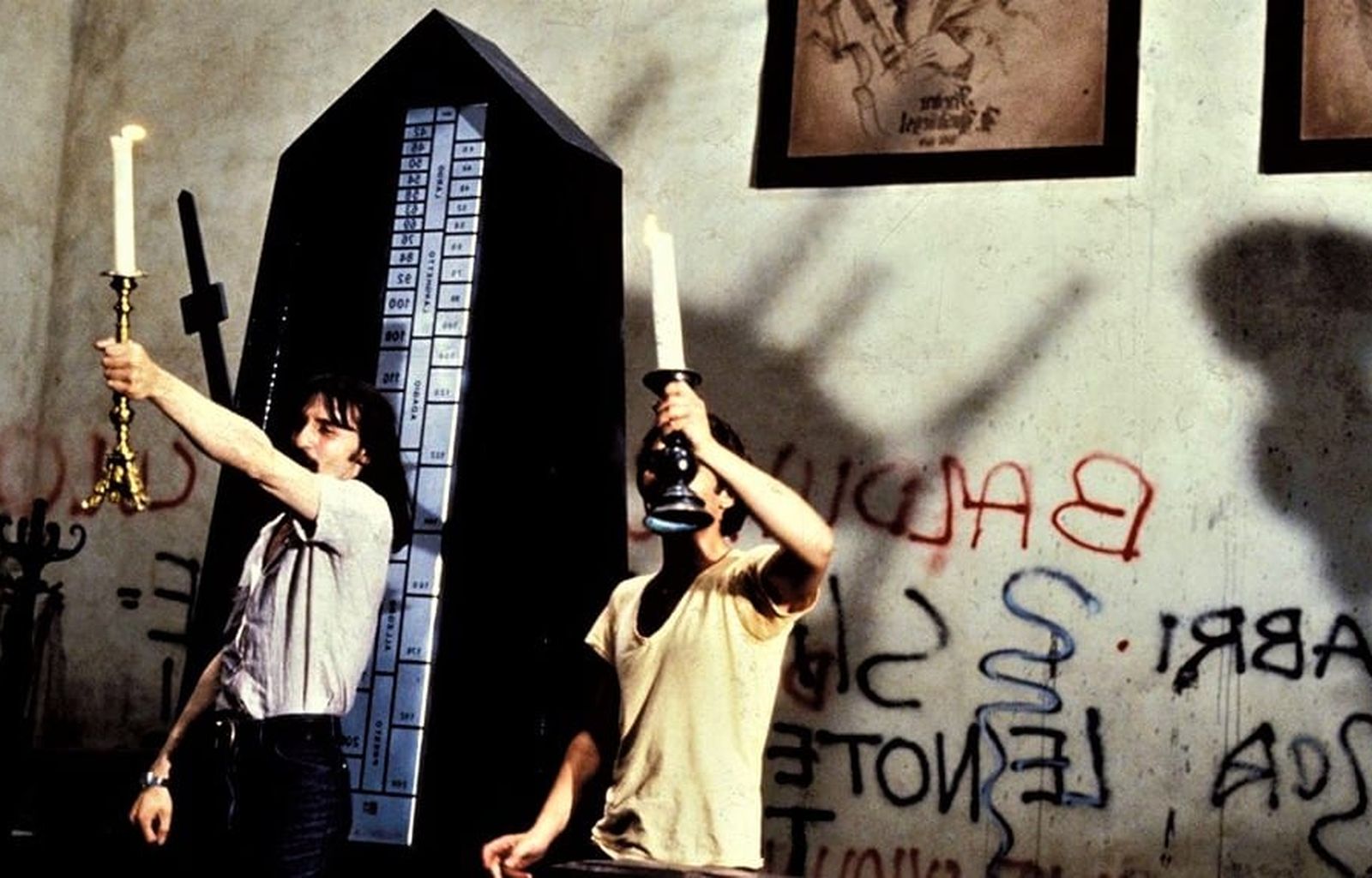
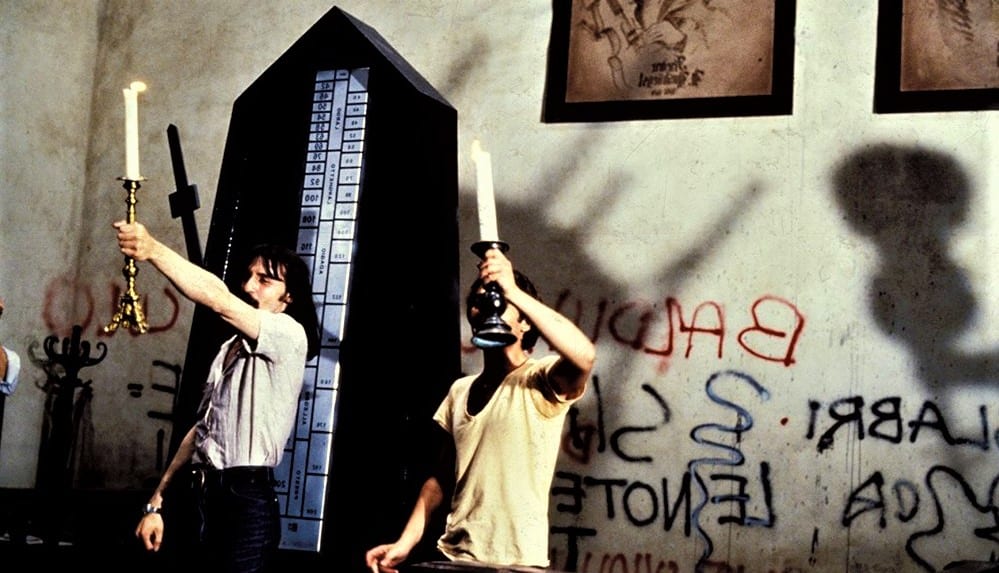
In a 13th-century oratory that has been transformed into an auditorium, an orchestra is waiting for its director to arrive; in the meantime, a TV crew is preparing to film the rehearsal. The musicians talk among themselves, they joke around and refer to their own role and their instrument as an essential part of the orchestra, each one is convinced they are indispensable. Slowly but surely, the unity of the group fractures, some are made nervous by the presence of the TV crew, others drink in solitude, others make fun of the older members of the orchestra. When the director – a tall, vain man with a German accent – arrives, the situation is about to explode and after the first, disastrous notes and a break that doesn’t ease the situation, the revolution breaks out for real: the musicians protest, anarchic slogans are written on the wall, the director is deposed. But after a large wrecking ball knocks down a wall, the members of the orchestra obediently sit back down in their places, while the director, who was initially accommodating, once again begins to inveigh against one and all, drunk on his own power… Made by Fellini for RAI during a pause in the filming of City of Women, a fable about the crisis in Italy during the late 1970s, with the subversive thrust of society and the natural, fierce, yet ridiculous dictatorial power of the director.
Biography
film director
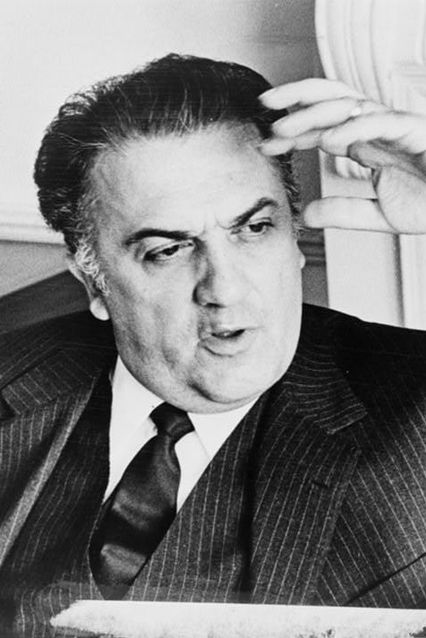
Federico Fellini
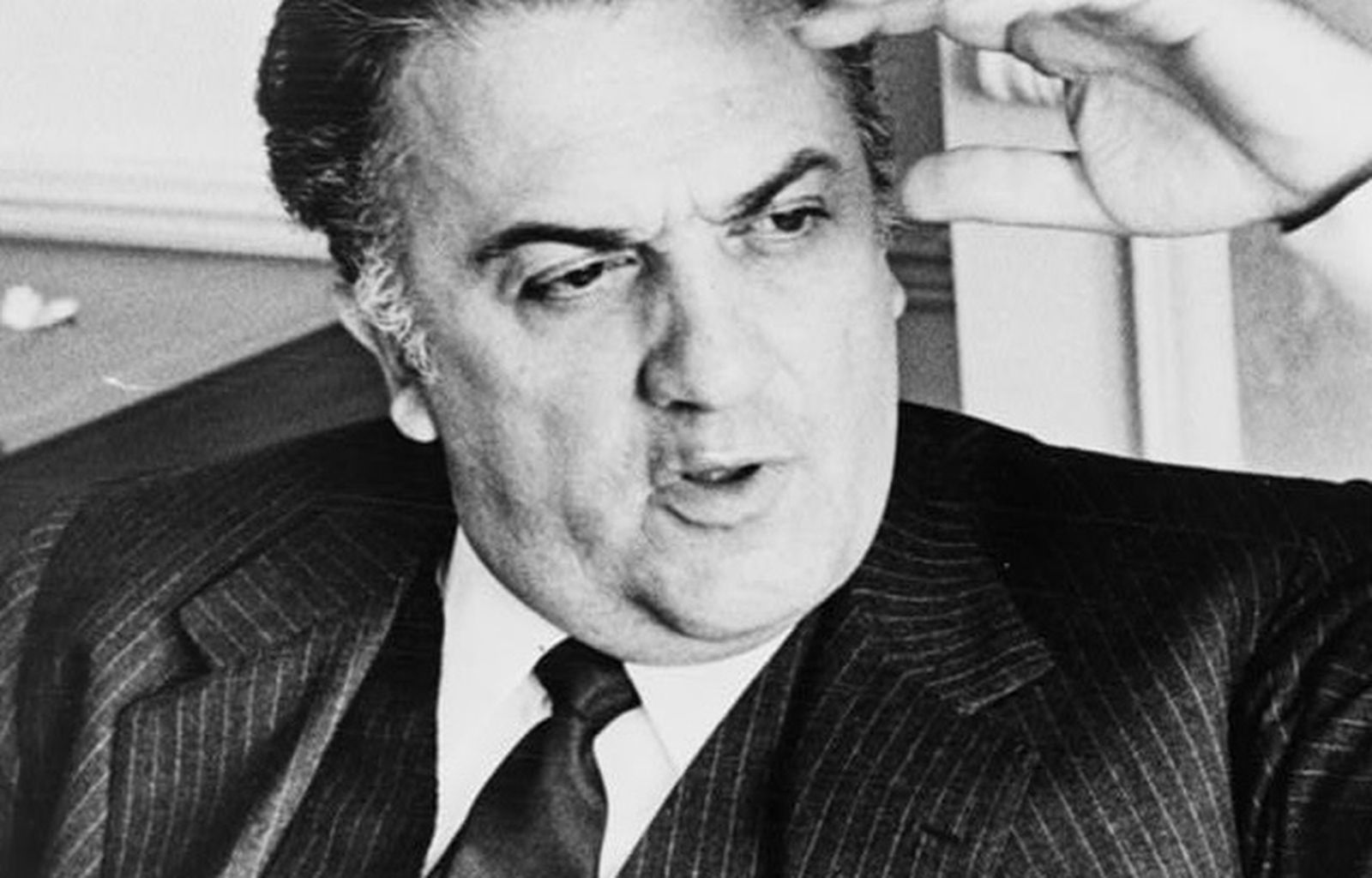
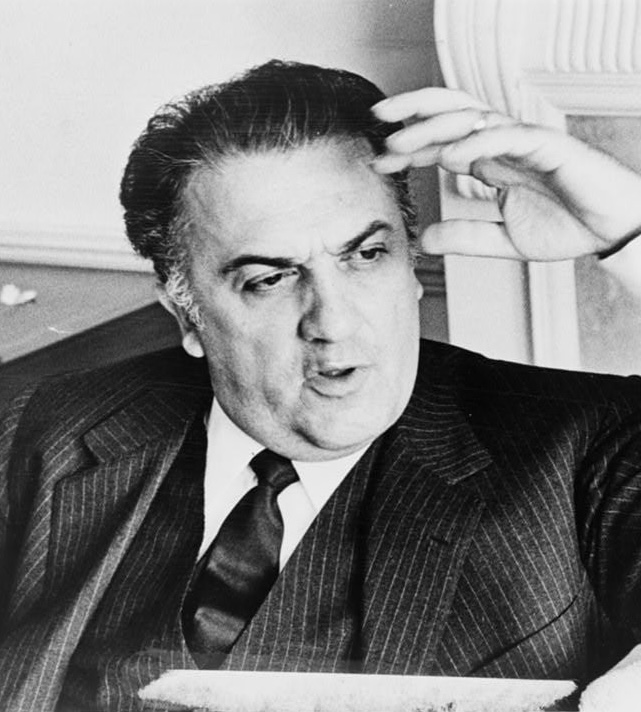
(Rimini, 1920 – Rome, 1993) is one of the greatest authors in film history. During his extraordinary career, which began as a screenwriter in the 1940s, he won five Academy Awards, including four for best foreign film (La strada, Le notti di Cabiria, 8½ e Amarcord) and one for Lifetime Achievement in 1993, a few months before dying. In 1985 the Venice Film Festival had already awarded him the Golden Lion for lifetime achievement. He also won the Palme d'Or at Cannes with his most famous film, La Dolce Vita (1960). With Marcello Mastroianni he created one of the most famous artistic partnerships ever. He was posed with actress and collaborator Giulietta Masina.
FILMOGRAFIA
Luci del varietà (co-regia Alberto Lattuada, 1950), Lo sceicco bianco (1952), L’amore in città (ep. Agenzia matrimoniale, 1953), I vitelloni (1953), La strada (1954), Il bidone (1955), Le notti di Cabiria (1957), La dolce vita (1960), Boccaccio ’70 (ep. Le tentazioni del dottor Antonio, 1962), 8½ (1963), Giulietta degli spiriti (1965), Tre passi nel delirio (ep. Toby Dammit, 1968), Fellini Satyricon (1969), Block-notes di un regista (doc, tv, 1969), I clowns (tv, 1970), Roma (1972), Amarcord (1973), Il Casanova di Federico Fellini (1976), Prova d’orchestra (1979), La città delle donne (1980), E la nave va (1983), Ginger e Fred (1986), Intervista (1987), La voce della Luna (1990).
Declaration
film director
“I had other projects, this one wasn’t urgent, I didn’t feel any urgency to make it. It didn’t correspond to a need. At a certain point, I did feel the need, when they killed Moro. Yes, when I learned that Moro had been killed. It made an enormous impression on me. Not the deed itself, I expected that. But the need to reflect on it, in order to understand the deep meaning of what had happened and why it had happened. What did those people who killed him want to do? What had happened to all of us who live in this country? Why were we reduced to this point? There was no direct connection between this and the movie, or at least I didn’t realize there was one. I perceived the connection a long time later, when the movie was already finished, in fact, when it was already in circulation. It’s not that I hadn’t immediately associated the movie with the meaning it has but I wasn’t aware why, at a certain point, I felt the deep need to make it. Well, later I became aware of it: it was Moro’s assassination.” (Franca Faldini, Goffredo Fofi, Il cinema italiano d’oggi, 1970-1984. Raccontato dai suoi protagonisti).
Cast
& Credits
DIRECTOR, STORY: Federico Fellini. SCREENPLAY: Federico Fellini, Brunello Rondi. CINEMATOGRAPHY: Giuseppe Rotunno. EDITING: Ruggero Mastroianni. PRODUCTION DESIGN: Dante Ferretti. COSTUMES: Gabriella Pescucci. CAST: Balduin Baas, Clara Colosimo, Elisabeth Labi, Ronaldo Bonacchi, Ferdinando Villella, Giovanni Javarone, David Mauhsell, Francesco Aluigi, Andy Miller, Sibyl Mostert, Franco Mazzieri, Daniele Pagani, Luigi Uzzo. PRODUCTION: Rai, Daimo Roma, Albatros Monaco.
CONTACT: CSC - Cineteca Nazionale diffusioneculturale@fondazionecsc.it