


19° TORINO FILM FESTIVAL
JEAN-MARIE STRAUB UND DANIÈLE HUILLET BEI DER ARBEIT AND EINEM FILM NACH FRANZ KAFKAS «AMERIKA»
by Harun Farocki
Country: France, Portugal
Year: 1983
Duration: 26'
Questo film è allo stesso tempo un autoritratto del regista e un omaggio a Jean-Marie Straub, ex insegnante dell'Akademie e modello comportamentale di Farocki. La sua ammirazione per Straub era talmente grande che di Zwischen zwei Kriegen disse: «Forse ho fatto questo film solo per guadagnarmi l'attenzione di Straub». In questo film di osservazione Farocki documenta l'appagamento di un suo desiderio: lo si vede mentre, sotto la direzione di Straub, prova la parte di Delamarche per il film Klassenverhältnnisse (1983).
Chiunque abbia visto il documentario di Farocki sulla lavorazione del film, non dimenticher` mai quelle brevi scene. La tecnica registica di Jean-Marie Straub e di sua moglie Danièle Huillet è così ripetitiva e ossessionata dai dettagli che gli attori sono costretti a provare le scene fino all'esaurimento. Straub dirige i suoi attori come un regista di teatro. Il fatto è che è piuttosto insolito fra i cineasti riuscire a fare buon uso del metodo di lavoro ispirato a Straub. Farocki ha filmato in questo cortometraggio un'opera di resistenza al cinema tradizionale, contro il quale anche i film di Farocki intendono ribellarsi.
(Tilman Baumgärtel)
Biography
film director
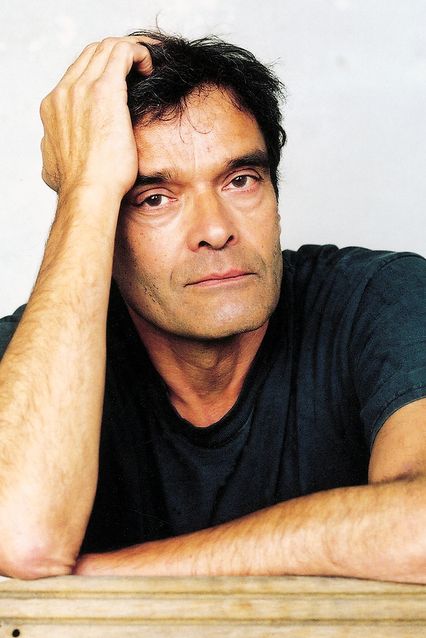
Harun Farocki
Harun Farocki (Nový Jicin, Germany, 1944 - Berlin, 2014), starting in 1967, made over one hundred and twenty films and installations which analyze the power of images in all their forms and expressions. After studying at Berlin’s Deutsche Film und Fernsehakademie in the climate of political agitation sweeping Germany during the late ‘60s, he began to make agitprop movies in black and white and in 16mm, often combining activism and performance, as is the case with Inextinguishable Fire (1969). Aware of the specificity of his means of communication, Farocki focused his work on a critical analysis of images and the contrasts they create with history, power and the dominant performance system. First with 16mm film, then with video, and finally with digital and digital animation techniques, Farocki developed the video-essay form about the visual arts. From his work during the 1980s and ‘90s, such as Before Your Eyes Vietnam (1982), An Image (1983), Images of World and Inscription of War (1988), and Still life (1997), to his installations of the 2000s (Counter Music, 2004; the series Serious Games, 2010, and Parellel, 2012-2014, which he created and curated with his life partner Antje Ehmann), his works trace and criticize the evolution in the language of images, in between stints at the editing table, photographic collages, security camera shots, aerial photos from WWII, advertising, fragments of films from the past, thermographic cameras, television clips, videogames, digital sequences, computer reconstructions of real landscapes… As a critic for the magazine “Filmkritik,” in his publications and during his seminars, Farocki studied the history of cinema and of German society, analyzing the evolution of the concept of work (for example, in How to Live in the Federal Republic of FRG, 1990) and measuring himself against filmmakers such as Jean-Marie Straub and Danièle Huillet, or Jean-Luc Godard, to whom, in 1998, he dedicated the book Speaking with Godard, which he wrote with Kaja Silvermann.
FILMOGRAFIA
Jeder ein Berliner Kindl (1966), White Christmas (1968), Die Rote Fahne (1968), Nixon kommt nach Berlin (1969), Nicht löschbares Feuer (1969), Sache, die sich versteht, Eine (1971), Zwischen zwei Kriegen (1978), Jean-Marie Straub und Danièle Huillet bei der Arbeit an einem Film (1983), Peter Lorre - Das doppelte Gesicht (1984), Image und Umsatz oder: Wie kann man einen Schuh darstellen? (1989), Videogramme einer Revolution (1992), Schnittstelle (1995), Arbeiter verlassen die Fabrik (1995), Bewerbungen (TV, 1996), Der Auftritt (1996), Stilleben (1997), Worte und Spiele (1998), Gefängnisbilder (2000), Die Schöpfer der Einkaufswelten (TV, 2001), Erkennen und verfolgen (2003), Formation (2005), On Construction of Griffith’s Film (2006), Digital Sam in Sam Saek 2007: Memories (ep. Respite, cm, 2007).
Cast
& Credits
Regia, sceneggiatura, montaggio: Harun Farocki.
Director of photography: Ingo Kratisch.
Sound: Klaus Klinger.
Director of photography: Ingo Kratisch.
Sound: Klaus Klinger.