

Country: Iran
Year: 1996
Duration: 80'
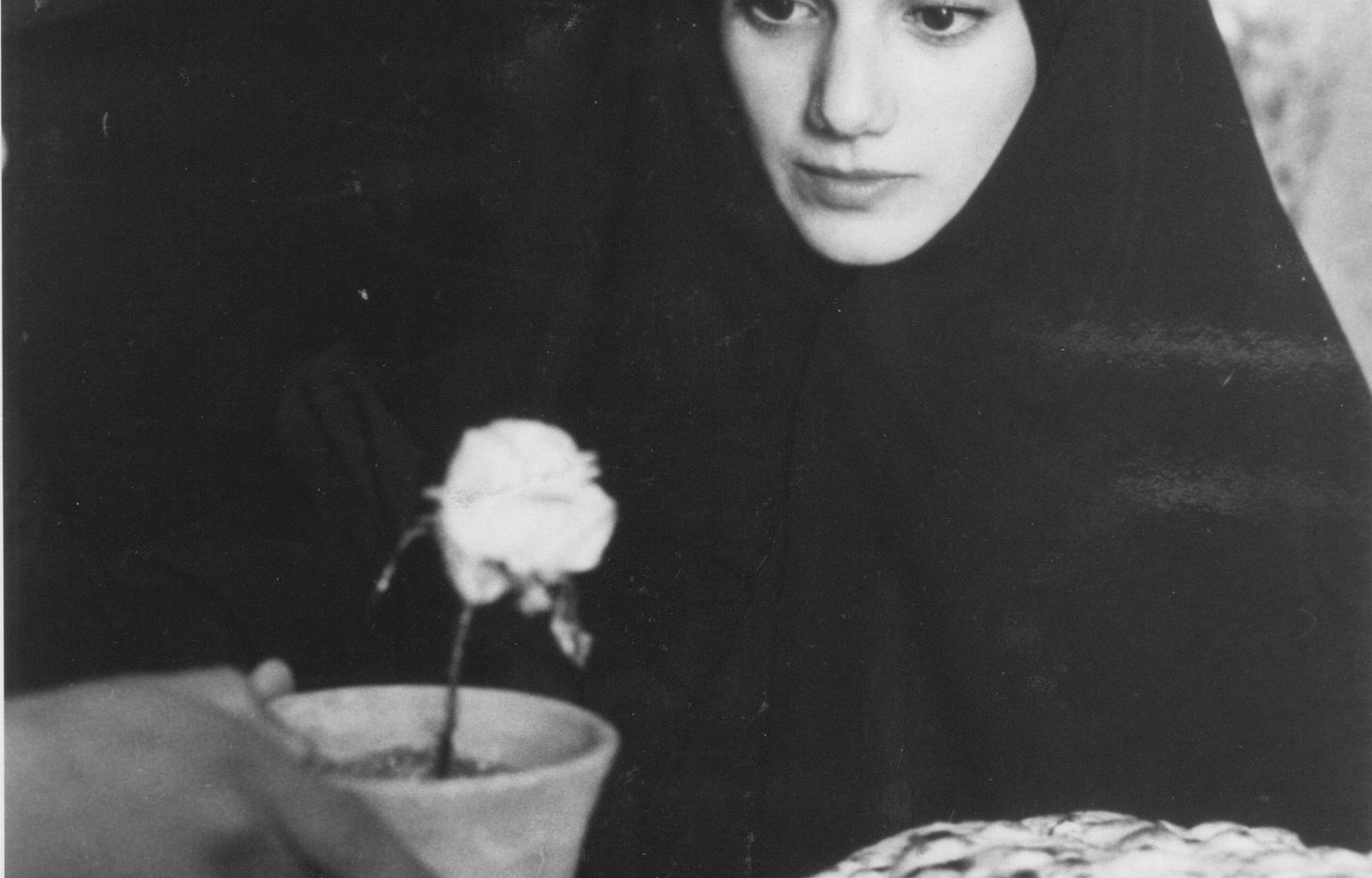
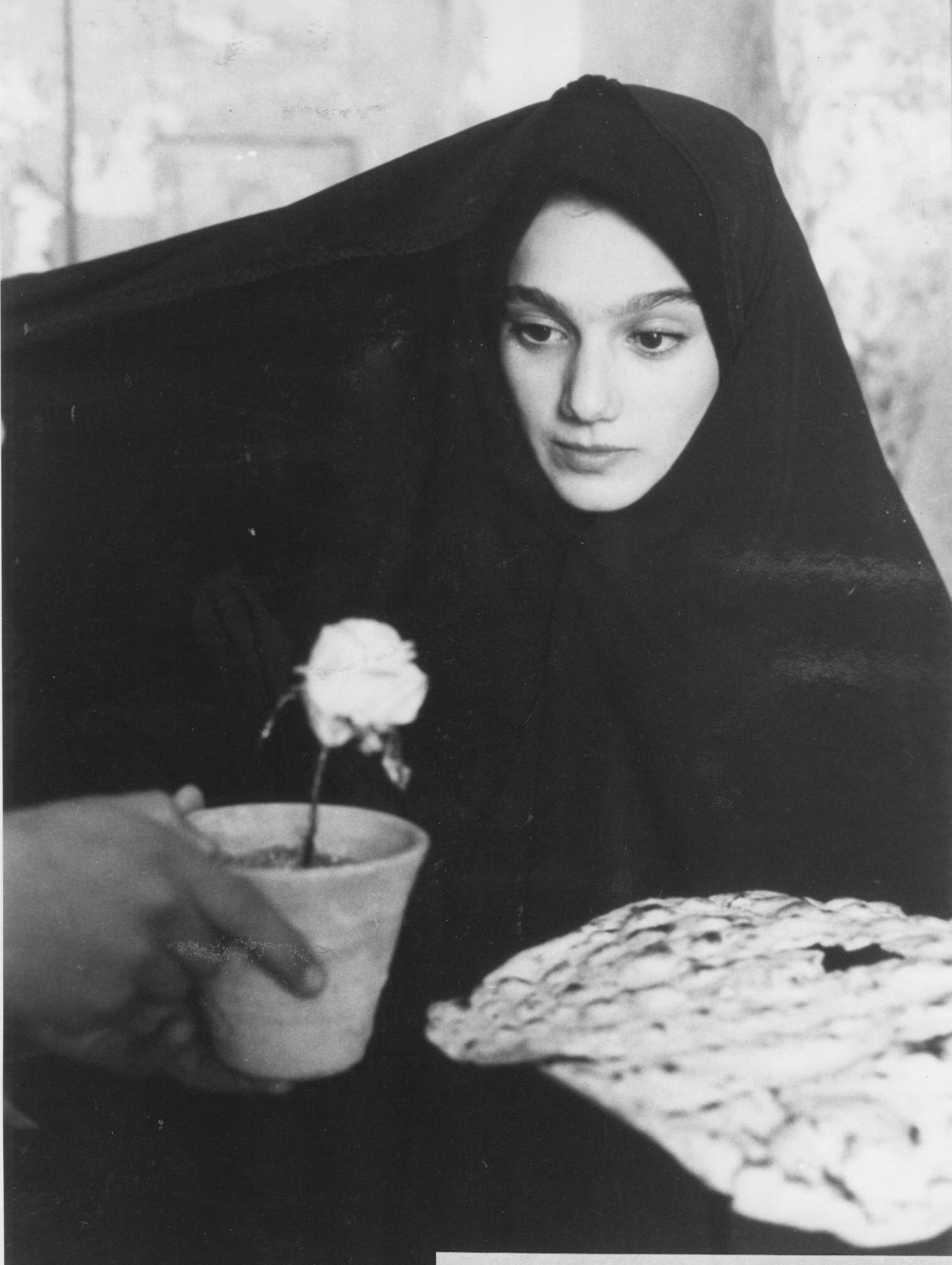
A former policeman now in his forties goes to Tehran to meet with the director Mohsen Makhmalbaf: he wants to play in his next film. They have already met 20 years earlier. At 17, Mohsen was a militant opponent of the Shah's regime, he fought with this policeman to desarm him: it went bad and Mohsen spent a few years in jail. Instead of offering him a role, the director suggests to reconstruct this dramatic moment in a film.
"I had published a cast call in the principal newspapers in order to hire the cast of Salaam Cinema. Among the thousands of candidates that showed up there was also the policeman whom I had stabbed fifteen years before. I was by then disappointed with politics. I had gotten out of prison and I no longer needed his weapon. On the other hand, he needed my weapon - the cinema, which serves neither to do politics nor to wound again. It was thanks to cinema that we finally tried to understand each other and to avoid combating one another again. My purpose and that of other film people in my country is to arrive at life, at love among people. The rest is a means, but I believe that you can pursue this end only through culture. This is what the film affirms - you have to use the flower and not the knife. You cannot reach democracy through arms." (Mohsen Makhmalbaf)
Biography
film director
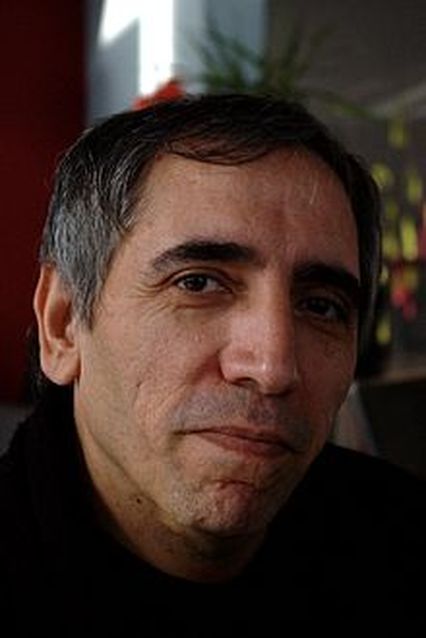
Mohsen Makhmalbaf
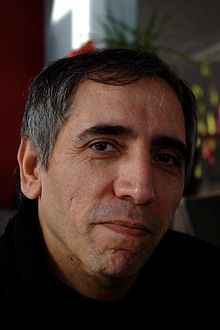
Born in 1957 in a poor quarter of Tehran, Mohsen Makhmalbaf had to do more than a dozen of odd jobs lo earn his own and help support his mother between the age of eight and seventeen. When he was 15, he engaged in clandestine activity through a guerrilla group he himself had organized. Al 17, he was shot and arrested when trying to disarm a policeman and spent four and a half years in prison.
Released during the 1979 revolution, he quit all political activity and went in for literature and cinema. His published work includes about twenty volumes of novels and dramaturgy, film scripts and essays on art, some of which haze been translated into Turkish, Arabic, Urdu, Kurdish and English. With several scripts in addition lo the ones he had personally filmed, two documentaries and 20 movies edited by him, Makhmalbaf is the most prolific Iranian director of the last two decades.
His fourteen films made in as many years have invariably been, for one reason or another, controversial at home and abroad. The Peddler, The Cyclist, Marriage of the Blessed, Time for Love, Once Upon a Time, Cinema, The Actor and Salaam Cinema have so far been presented at 170 international film festivals and screened in 40 countries, with 22 prizes won among them. The awards include the top prize at the Rimini International Film Festival (Italy, 1989) and the East-West Award al the Hawaii International Film Festival (Usa, 1991) for The Cyclist; the First Prize of the Taormina International Film Festival (Italy, 1992), the jury's Special Award and the Fipresci film critics' award at the Karlovy Vary International Film Festival (Czechoslovakia, 1992), and the jury's Special Award at the Istanbul International Film Festival (Turkey, 1992) for Once Upon a Time, Cinema; and the Critics' Award (Sao Paulo, Brasil, 1995) for all his works.
FILMOGRAFIA
Film di finzione/Fiction Films
Tobe-ye Nasuh (Nasooh's Repentance/Pentimento definitivo, 1982).
Do cheshm-e bi su (Two Sightless Eyes/Due occhi senza luce, 1983).
Estèaze (Seeking Refuge in God/Rifugiarsi in Dio, 1984).
Baycot (Boycott/Il boicottaggio, 1985).
Dastforush (The Peddler/L'ambulante, 1986).
Baysilkeran (The Cyclist/Il ciclista, 1987).
'Arusi-ye khuban (The Marriage of the Blessed/Il matrimonio dei benedetti, 1988).
Nobat-e asheqi (Time of Love/Tempo d'amare, 1990).
Shabhay-e Zayandeh Rud (Nights on the Zayandeh Rud/Notti sullo Zayandeh Rud, 1990).
Ruzi ruzegari cineina/Nasseroddin Shah, hactore cinema (Once Upon a Time, Cinema/C'era una volta il cinema, 1991).
Honar Pishé (The Actor/ L'attore, 1992).
Salaam Cinema (Salam Cinema, 1994).
Gabbeh (idem, 1995).
Nun va goldun (A Moment of Innocence/Un istante di innocenza,1996).
Documentari/Documentare
Gozideh tasvir dar doran-c Qajar (A Selection of Images from Qajar Era/Una selezione di immagini del periodo Qajar, 1992).
Sang-o shisheh (The Stone and the Glass/La pietra e il vetro, 1993).
Cast
& Credits
Director, screenplay and editor: Mohsen Makhmalbaf.
Director of photography: Mahmoud Kalari.
Art director: Reza Alaqemand.
Music: Majid Entezami.
Sound: Nezameddin Klayi.
Cast: Ali Bakhshi Jozam, Mir Hadi Tayebi, Ammar Tafti, Elham Mohammad-Amini, Moharam Zeinalzadeh, Mohsen Makhmalbaf.
Production company: Pakhshiran Co. - Abolfazi Alagheband - MK2 Productions.
Foreign sales agent: MK2 diffusion, 55 rue Traversière, 75012 Paris, tel. +33-1-43071510, fax +33-1-43442018.
Director of photography: Mahmoud Kalari.
Art director: Reza Alaqemand.
Music: Majid Entezami.
Sound: Nezameddin Klayi.
Cast: Ali Bakhshi Jozam, Mir Hadi Tayebi, Ammar Tafti, Elham Mohammad-Amini, Moharam Zeinalzadeh, Mohsen Makhmalbaf.
Production company: Pakhshiran Co. - Abolfazi Alagheband - MK2 Productions.
Foreign sales agent: MK2 diffusion, 55 rue Traversière, 75012 Paris, tel. +33-1-43071510, fax +33-1-43442018.