


Country: Ireland
Year: 2000
Duration: 94'
Lenin passes the last days of his life in a house deep in
the woods. In 1923, at only fifty-one years of age, he is very ill, he has no
strength left, his mind is foggy. The Country is shaken by serious social
upheaval, but the great leader is locked up and under guard, kept far from
power. Between moments of agony and rage, lucidity and drowsiness, humiliating
visits by comrades and the faithful presence of his wife, Lenin lives out the
tragedy of a man who contributed to changing history and now, immobilized by
disease and embalmed even before dying, feels himself inexorably
abandoned.
Biography
film director
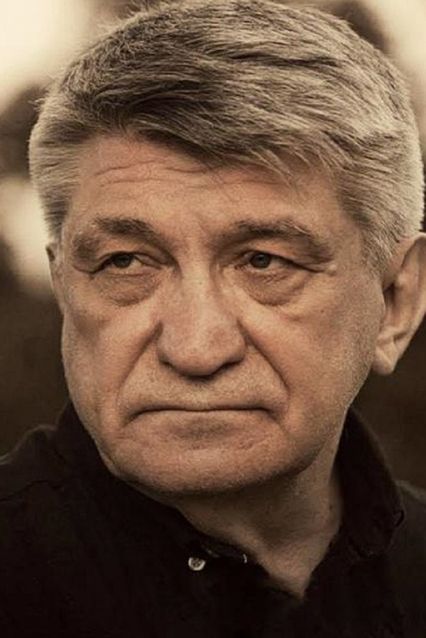
Aleksandr Sokurov
(Podorvicha, Russia, 1951) studied cinema at VGIK in Moscow but left before completing his studies because of contrasts with the Goskino. In 1980 he began working at Lenfil'm, but only after perestroika could the films he made during this period be seen, like his debut film The Lonely Voice of Man (1978). In 1985 he inaugurated the series of Elegies and in the 1990's he experimented with digital technology in A Humble Life (1997) and Dolce (1999). He received world-wide recognition with Mother and Son (1997), Moloch (1999), Russian Ark (2002) and Father and Son (2003). In 2003, the Film Festival dedicated a complete retrospective to his opus. In 2011 his film Faust won Golden Lion in Venice Film Festival. In 2019 la sua scuola di cinema nel Kabardino-Balkaria, che ha lanciato giovani registi come Kantemir Balagov e Kira Kovalenko, è stata chiusa per via dei contrasti tra il regista e il governo russo. In 2019 the film foundation set up by Alexander Sokurov, which raised young directors such as Kantemir Balagov and Kira Kovalenko, has been closed after claims of government hostility.
FILMOGRAFIA
Finzione
Odinokiy golos cheloveka (La voce solitaria dell’uomo, 1978-1987), Razzhalovannyy (The Degrade, cm, 1980), Skorbnoye beschuvstviye (Una dolorosa indifferenza, 1983-1987), Ampir (cm, 1987), Dni zatmeniya (I giorni dell'eclisse, 1988), Spasi i sohrani (Salva e custodisci, 1989), Krug vtoroy (Il secondo cerchio, 1990), Kamen (Pietra, 1992), Tikhiye stranitsy (Pagine sommesse, 1994), Mat i syn (Madre e figlio, 1997), Molokh (Moloch, 1999), Telets (Taurus, 2001), Russkiy kovcheg (Arca russa, 2002), Otets i syn (Padre e figlio, 2003), Solntse (Il Sole, 2005), Aleksandra (Alexandra, 2007), Faust (id., 2011), Francofonia (id., 2015), Skazka (Fairytale, 2022).
Elegie
Elegiya (Elegia, cm, 1986), Moskovskaya elegiya (Elegia moscovita, 1987), Peterburgskaya elegiya (Elegia di San Pietroburgo, mm, 1990), Sovetskaya elegiya (Elegia sovietica, cm, 1990), Prostaya elegiya (Elegia semplice, 1990), Elegiya iz Rossii (Elegia dalla Russia... studi per un sogno, 1992), Vostochnaya elegiya (Elegia orientale, 1996), Elegiya dorogi (Elegia di un viaggio, 2001), Elegiya zhizni. Rostropovich. Vishnevskaya (Elegia della vita - Rostropovich, Vishnevskaya, 2006).
Documentari
I nichego bolshe (And Nothing More, 1987), Zhertva vechernyaya (Evening Sacrifice, 1987), Patience Labour (1987), Altovaya sonata. Dmitriy Shostakovich (Sonata for Viola. Dmitri Shostakovitch, 1988), Mariya (Maria, 1988), Sonata dlya Gitlera (Sonata for Hitler, 1989), K sobytiya v Zakavkazye (To the Events in Transcaucasia, 1990), Leningradskaya retrospektiva (1957-1990) (A Retrospection of Leningrad (1957-1990), 1990), An Example of Intonation (1991), Soldatskiy son (Soldier’s Dream, cm, 1995) , Dukhovnyye golosa (Spiritual Voices, 1995), Robert Schastlivaya zhizn (Hubert Robert. A Fortunate Life, 1996), Smirennaya zhizn (Una vita umile ,1997), Peterburgskij dnevnik: Otkrytie pamjatnika Dostoevskomu (Diario di San Pietroburgo: L’inaugurazione del monumento a Dostoevskij, 1997), Peterburgskij dnevnik: Kvartira Kozintseva (Diario di San Pietroburgo: L’appartamento di Konincev, 1998), Povinnost (Confession, 1998), The Dialogues with Solzhenitsyn (Uzel) (1998), Dolce (2000), Peterburgskij dnevnik: Mozart. Rekviem (Diario di San Pietroburgo: Mozart. Requiem, 2004), Citaem blokadnuju knigu (Leggendo il libro dell’assedio, 2009).
Cast
& Credits
Regia, fotografia/Director, director of
photography: Aleksandr Sokurov
Soggetto, sceneggiatura/Story, screenplay: Jurij Arabov Scenografia/Set design: Natalja Ko¤ergina
Costumi/Costumes design: Lidija Krjukova
Montaggio/Film editor: Leda Semënova
Musica/Music: Andrej Sigle
Suono/Sound: Sergej Moškov
Interpreti e personaggi/Cast and characters: Leonid Mozgovoj, Maria Kuznecova, Natalia Nikulenko, Sergej Ražuk, Lev Eliseev, Nikolaj Ustinov Produttore/Producer: Viktor Sergeev
Produzione/Production: Lenfil'm
Soggetto, sceneggiatura/Story, screenplay: Jurij Arabov Scenografia/Set design: Natalja Ko¤ergina
Costumi/Costumes design: Lidija Krjukova
Montaggio/Film editor: Leda Semënova
Musica/Music: Andrej Sigle
Suono/Sound: Sergej Moškov
Interpreti e personaggi/Cast and characters: Leonid Mozgovoj, Maria Kuznecova, Natalia Nikulenko, Sergej Ražuk, Lev Eliseev, Nikolaj Ustinov Produttore/Producer: Viktor Sergeev
Produzione/Production: Lenfil'm