

Country: USA
Year: 1953
Duration: 91'
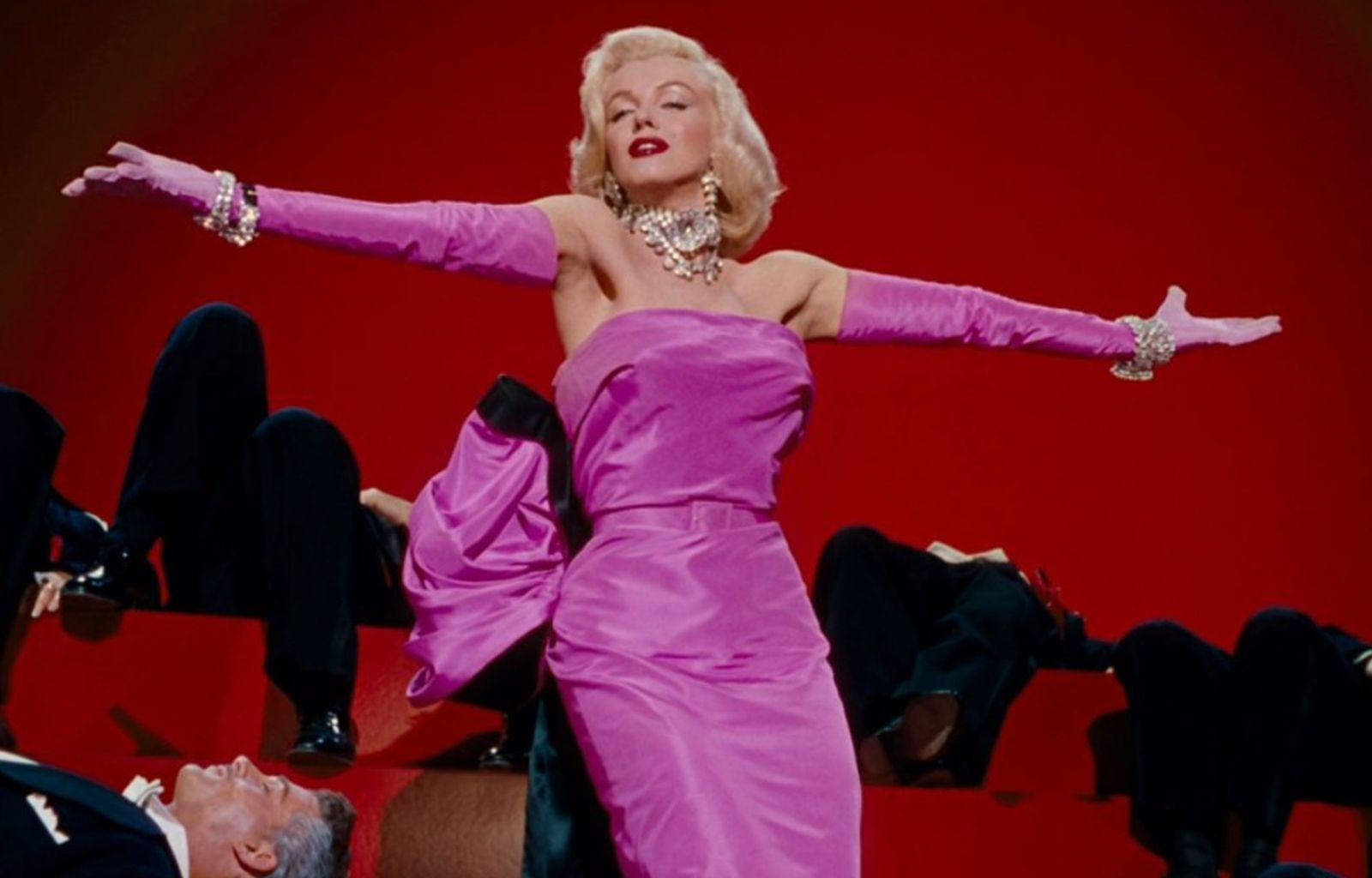
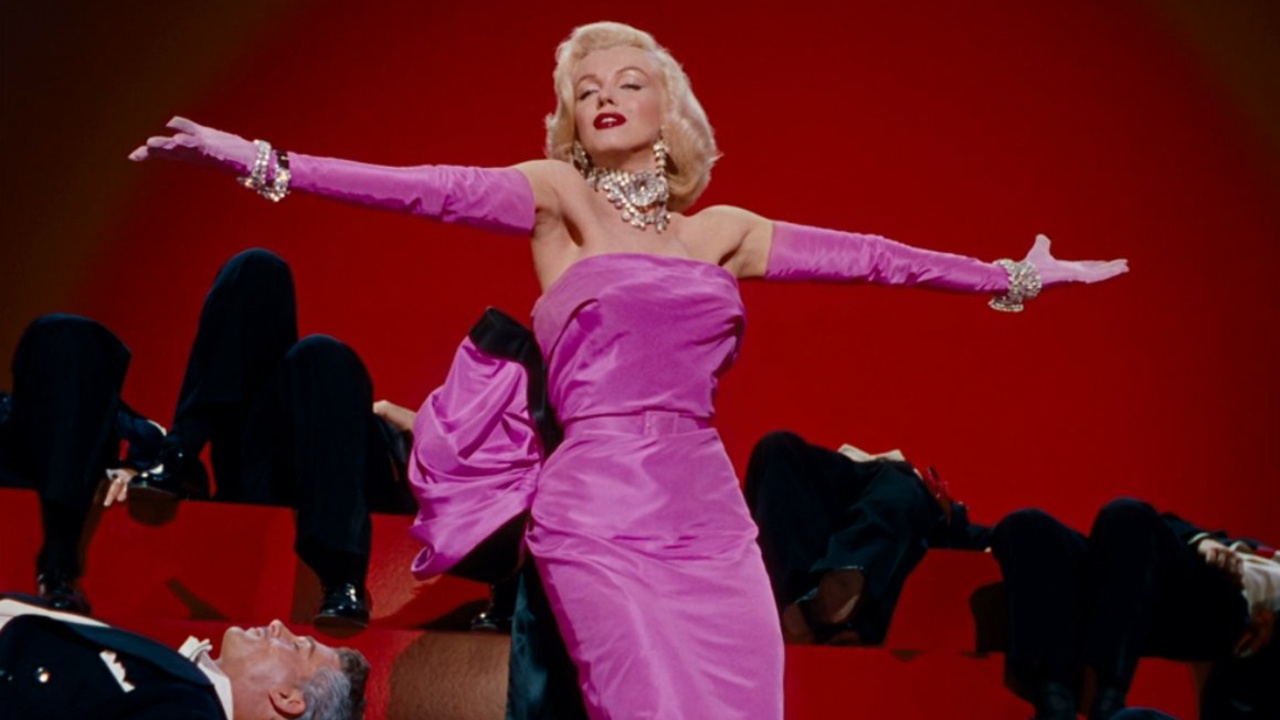
Loreley (Marilyn Monroe) and Dorothy (Jane Russell) are both looking for a husband, preferably a wealthy one. Disappointed by her rich fiancé, Loreley persuades her friend to board a ship bound for Europe, where the two get into all sorts of trouble. Loreley seduces a baronet and convinces him to give her a precious tiara, while Dorothy falls in love with the detective sent to keep an eye on them. When they arrive in Paris, they are accused of theft, but in the end everything is sorted out and both women find love. One of Hawks’s best-known musical comedies, based on Anita Loos’s novel and the musical adapted from it, the film plays with female stereotypes (the blonde and the brunette) and male ones (the fool and the tough guy) to offer a sharp reflection on instincts and desires common to both sexes. The two leading actresses are unforgettable.
Biography
film director

Howard Hawks
(Goshen, 1896 – Palm Springs, 1977) after graduating at the Cornell University, moved to Los Angeles, where he entered the world of cinema as a prop master at the Famous Players-Lasky. Hired by Paramount in 1922 as a screenwriter, he debuted in directing at Fox in 1926 and had his first big success thanks to the producer Howard Hughes, who chose him to direct Scarface, Shame of the Nation (1932). One of the top directors during the golden age of Hollywood, he was famous for his eclectic genres and masterly use of the classic style, alternating comedies (Bring Up Baby, 1938; I Was a Male War Bride, 1949), noir (The Big Sleep, 1946), Westerns (Red River, 1948, Rio Bravo, 1959), war movies (Air Force, 1943), and musicals (Gentlemen Prefer Blondes, 1953). He received an Oscar for Lifetime Achievement in 1975.
FILMOGRAFIA
The Road to Glory (Bolidi in corsa, 1926), Fig Leaves (Le disgrazie di Adamo, 1926), The Cradle Snatchers (Amanti per burla, 1927), Paid to Love (Passione di principe, 1927), Fazil (Oasi dell’amore, 1928), A Girl in Every Port (Capitan Barbablù, 1928), The Air Circus (La via delle stelle, 1928), Trent’s Last Case (L’affare Manderson, 1929), The Dawn Patrol (La squadriglia dell’aurora, 1930), The Criminal Code (Codice penale, 1931), The Crowd Roars (L’urlo della folla, 1932), Scarface, Shame of the Nation (Scarface - Lo sfregiato, 1932), Tiger Shark (Le tigri del Pacifico, 1932), Today We Live (Rivalità eroica, 1933), The Prizefighter and the Lady (L’idolo delle donne, 1933), Viva Villa! (id., 1934), Twentieth Century (Ventesimo secolo, 1934), Barbary Coast (La costa dei barbari, 1935), Ceiling Zero (Brume, 1936), The Road to Glory (Le vie della gloria, 1936), Come and Get It (Ambizione, 1936), Bringing Up Baby (Susanna!, 1938), Only Angels Have Wings (Avventurieri dell’aria, 1939), His Girl Friday (La signora del venerdì, 1940), The Outlaw (Il mio corpo ti scalderà, 1941), Sergeant York (Il sergente York, 1941), Ball of Fire (Colpo di fulmine, 1941), Air Force (Arcipelago in fiamme, 1943), To Have and Have Not (Acque del sud, 1944), The Big Sleep (Il grande sonno, 1946), Red River (Il fiume rosso, 1948), A Song Is Born (Venere e il professore, 1948), I Was a Male War Bride (Ero uno sposo di guerra, 1949), The Thing from Another World (La cosa da un altro mondo, 1951), The Big Sky (Il grande cielo, 1952), O. Henry’s Full House (La giostra umana, 1952), Monkey Business (Il magnifico scherzo, 1952), Gentlemen Prefer Blondes (Gli uomini preferiscono le bionde, 1953), Land of the Pharaohs (La regina delle piramidi, 1955), Rio Bravo (Un dollaro d’onore, 1959), Hatari! (id., 1962), Man’s Favorite Sport? (Lo sport preferito dall’uomo, 1964), Red Line 7000 (Linea rossa 7000, 1965), El Dorado (id., 1966), Rio Lobo (id., 1970).
Cast
& Credits
DIRECTOR: Howard Hawks. SOURCE: from the musical by Anita Loos and Joseph Fields. SCREENPLAY: Charles Lederer. CINEMATOGRAPHY: Harry J. Wild. EDITING: Hugh S. Fowler. SPECIAL EFFECTS: Ray Kellogg. PRODUCTION DESIGN: Lyle Wheeler, Joseph C. Wright, Claude E. Carpenter. COSTUMES: Travilla, Charles Le Maire. MAKE-UP: Ben Nye, Allan Snyder. MUSIC: Lionel Newman, Jule Styne, Leo Robin, Hoagy Carmichael, Harold Adamson. CAST: Marilyn Monroe, Jane Russell, Charles Coburn, Elliott Reid, Tommy Noonan, George Winslow, Marcel Dalio, Taylor Holmes, Norma Varden, Howard Wendell, Steven Geray, Alex Frazer. PRODUCER: Sol C. Siegel for 20th Century Fox. DISTRIBUTION: 20th Century Fox. CONTACT: Park Circus www.parkcircus.com