

Country: South Korea, Japan, France
Year: 2026
Duration: 115'
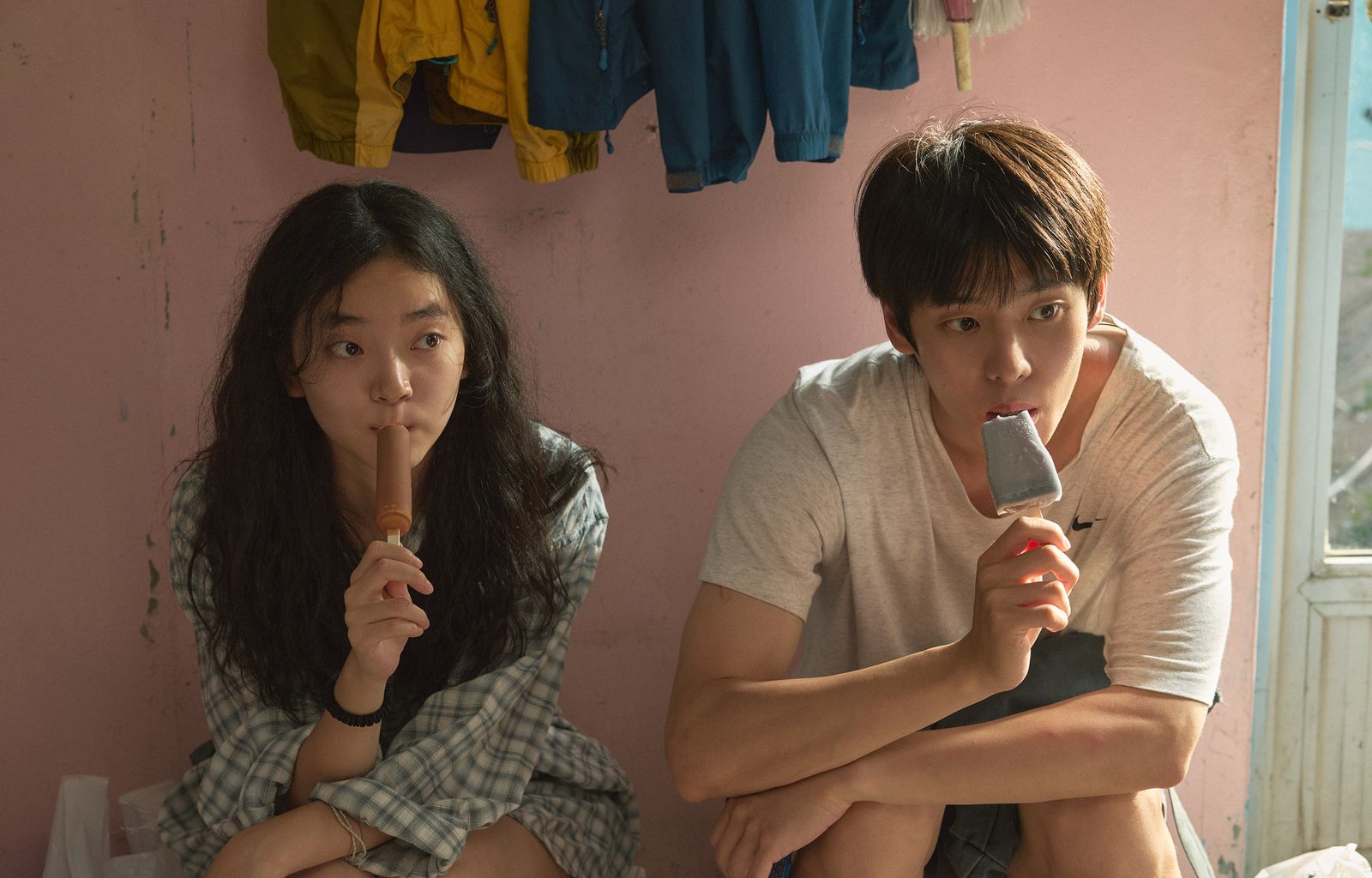
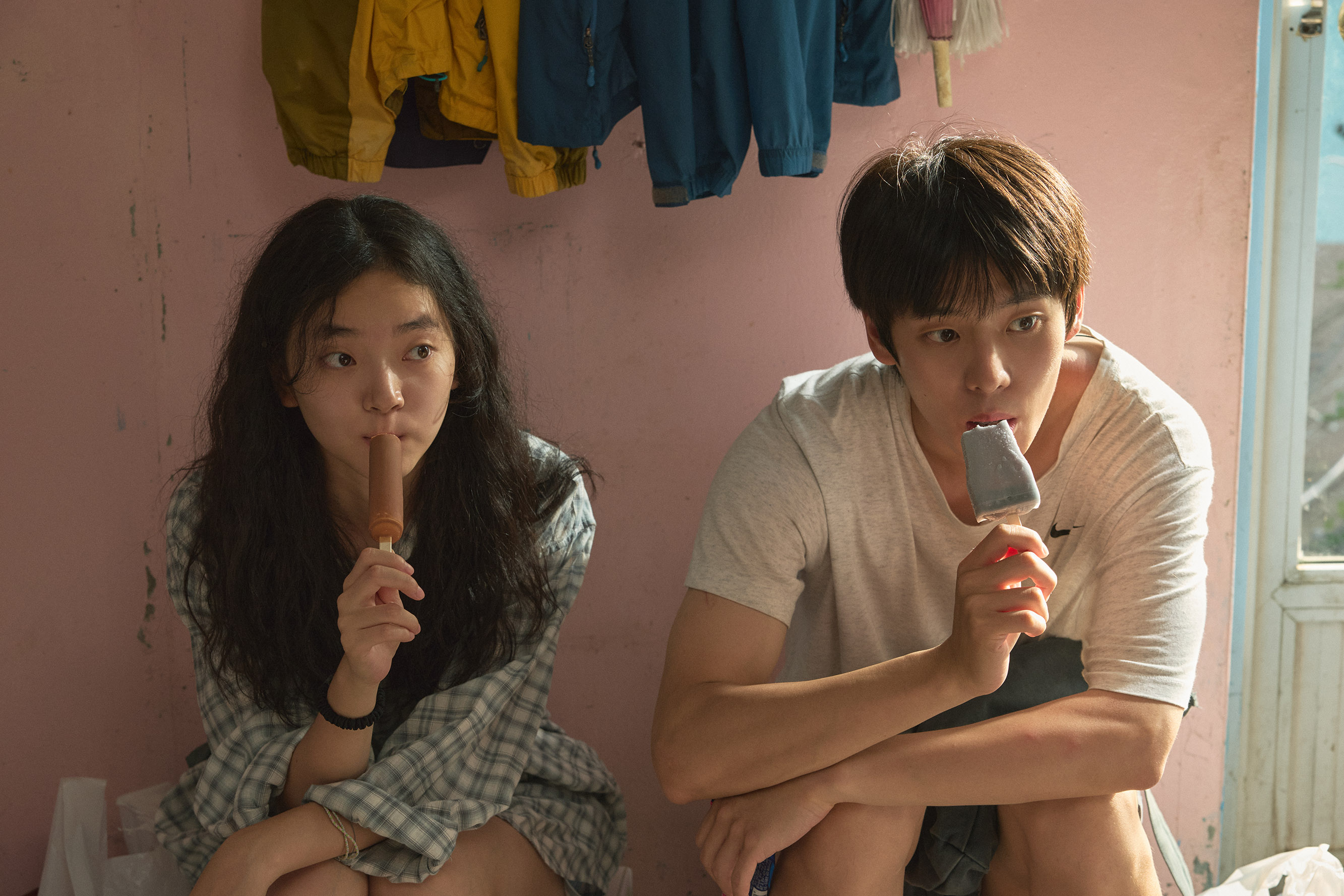
Seventeen-year-old Jin has never left the island where she was born, a place with no road to the mainland. There, everyone knows one another, and the sea quietly sets the rhythm of everyday life. When Dujae returns for his grandmother’s funeral, he stays on alone in the house she left behind. Jin begins finding small excuses to visit him. She brings oil for his bicycle chain, ointment for a scrape, and drops by with things he never really asked for. Little by little, visiting him becomes part of her everyday life. What the excuses are for, Jin herself doesn’t quite know yet. As the summer wears on, the island Jin has always known begins to feel unfamiliar. The roads she has walked all her life, the sea she has always taken for granted, and the faces she sees every day all seem subtly transformed. Without ever leaving the island, Jin finds herself looking at it – and at herself – for the first time.
Biography
film director

Dan-bi Yoon
(South Korea), after making his debut in 2015 with the short film Fireworks, which was screened at the Daegu Independent Short Film Festival and the Korea Youth Film Festival, directed his first feature film, Moving On (2020), which was presented in competition at the Turin Film Festival and won four awards at the Busan International Film Festival. The World Before (2026) is his second feature film.
FILMOGRAFIA
Fireworks (cm, 2015), Moving On (2020), Another Record: Lee Je-hoon (2022), The World Before (2026).
Declaration
film director
“We often think of islands as places of isolation. Places cut off from the outside world, where one dreams of escape. But to someone born and raised there, the island is not deficient, it is an entire world. It has a school, work, love and death. Jin is not a trapped child. She is living within a complete world, and she has never felt it to be too small for her. What interested me was the moment that, because of someone coming in from the outside, cracks appeared in a world that until yesterday had seemed sufficient. Those cracks are not an issue related to the island, but of one’s coming of age. Such a moment comes to everyone, regardless of where they grow up. However, on an island, it can be more clearly seen. That is because the edges of this world are visible.”
Cast
& Credits
DIRECTOR, SCREENPLAY: Yoon Dan-bi. CINEMATOGRAPHY: Lee Seong-eun. PRODUCTION DESIGN: Kim Young-tak. COSTUME DESIGN: Lee Ji-hye. EDITING: Won Chang-jae. MUSIC: Lee Min-hwi. SOUND: Kim Won. GAFFER: Hong Cho-rong. DI COLORIST: Lee Hye-min. CAST: Sim Su-bin, Kim Eo-jin. PRODUCTION: Yoon Dan-bi for CHEONGGWA. EXECUTIVE PRODUCER: Hatanaka Suzuko, Song Young-shin. COPRODUCTION: Humanité Co. CONTACT: Magdalena Banasik, M-Appeal films@m-appeal.com